

Why Great Strategy Gets Lost on the Way to Delivery
February 2026
We work with talented teams across multiple sectors who share a common frustration: great strategic thinking that somehow gets stuck in implementation. The teams are not lacking expertise or commitment. Often, they are among the brightest people we have worked with. Yet week after week, the gap between "what we agreed" and "what is actually happening" seems to widen.
Through facilitating cross-functional workshops for these teams, we have noticed a pattern. The problem usually has nothing to do with the strategy itself. More often, brilliant people from different departments are essentially speaking different languages, even when they are in the same room discussing the same project.
The Real Challenge Is Not Strategic. It Is Human.
The real barrier is that cross-functional teams need to empathise with each other's constraints and pressures before they can collaborate effectively. When regulation says "we need this by Friday," does everyone understand what happens if that deadline slips? When design asks for "just one more iteration," does everyone grasp why that iteration matters for the product's success?
Here is what we typically see when we first meet a team: everyone understands their part of the puzzle perfectly. Regulatory knows exactly what is needed for submission, design has a clear product vision, manufacturing understands the production requirements, and commercial can articulate the market opportunity. Individually, the thinking is excellent.
But when they sit together to discuss a project, what sounds like disagreement over timelines or resources is often something deeper: teams operating from different assumptions about what success looks like, different understandings of each other's constraints, and different fears about what could go wrong.
What This Looks Like in Practice
Take a recent workshop we facilitated, where three departments were locked in conflict over a submission deadline. The surface conversation was about whether they needed six or eight weeks. But when we used structured exercises to understand what each team was genuinely worried about, the conversation changed entirely.
What emerged was that each department had a deeper concern underlying their stated position. Design's request for more time was really about protecting their professional reputation if a rushed submission were rejected. Regulatory's insistence on the deadline stemmed from the knowledge that missing this review window meant waiting months for the next one. And manufacturing's pushback on costs was driven by a need to protect other product lines from disruption.
Once the teams understood each other's genuine concerns rather than just their stated positions, the solutions became apparent. But it took a structured conversation to reach that point.
Why Traditional Meetings Do Not Solve This
Most organisations attempt to address execution challenges by holding more meetings or developing better project plans. These approaches assume the problem stems from information sharing or coordination. In our experience, that is rarely the root cause.
Traditional meetings often fail to create space for deeper understanding. People share updates, identify action items, and leave. The underlying assumptions remain unspoken, and teams continue to operate within their own mental models of how things should work.
A Different Approach
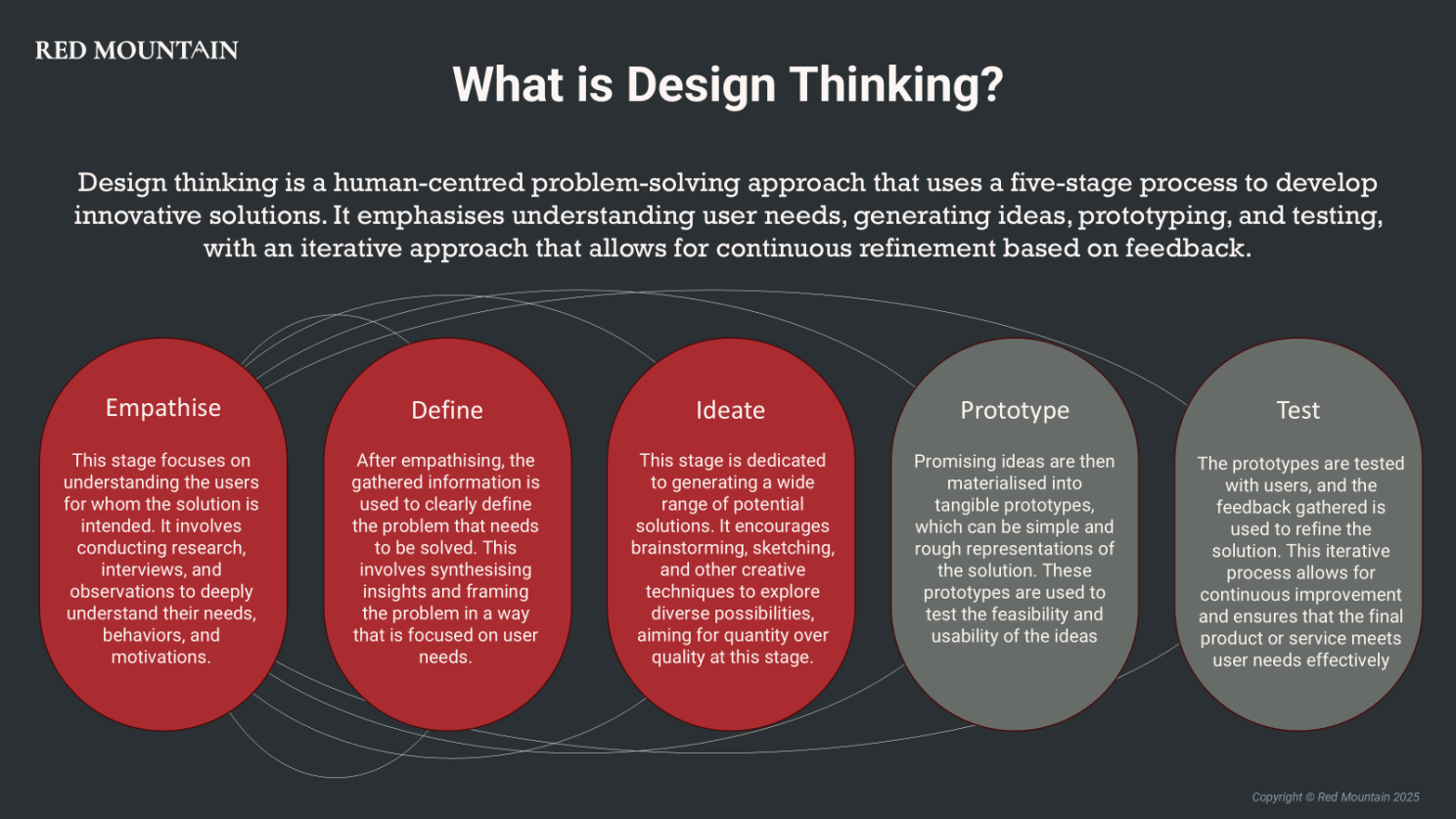
This is where structured facilitation using the Design Thinking methodology becomes unexpectedly powerful for business teams. The same principles that create great products can help teams build strong working relationships. Rather than starting with solutions, the process creates space for teams to truly understand each other's constraints before generating options together.
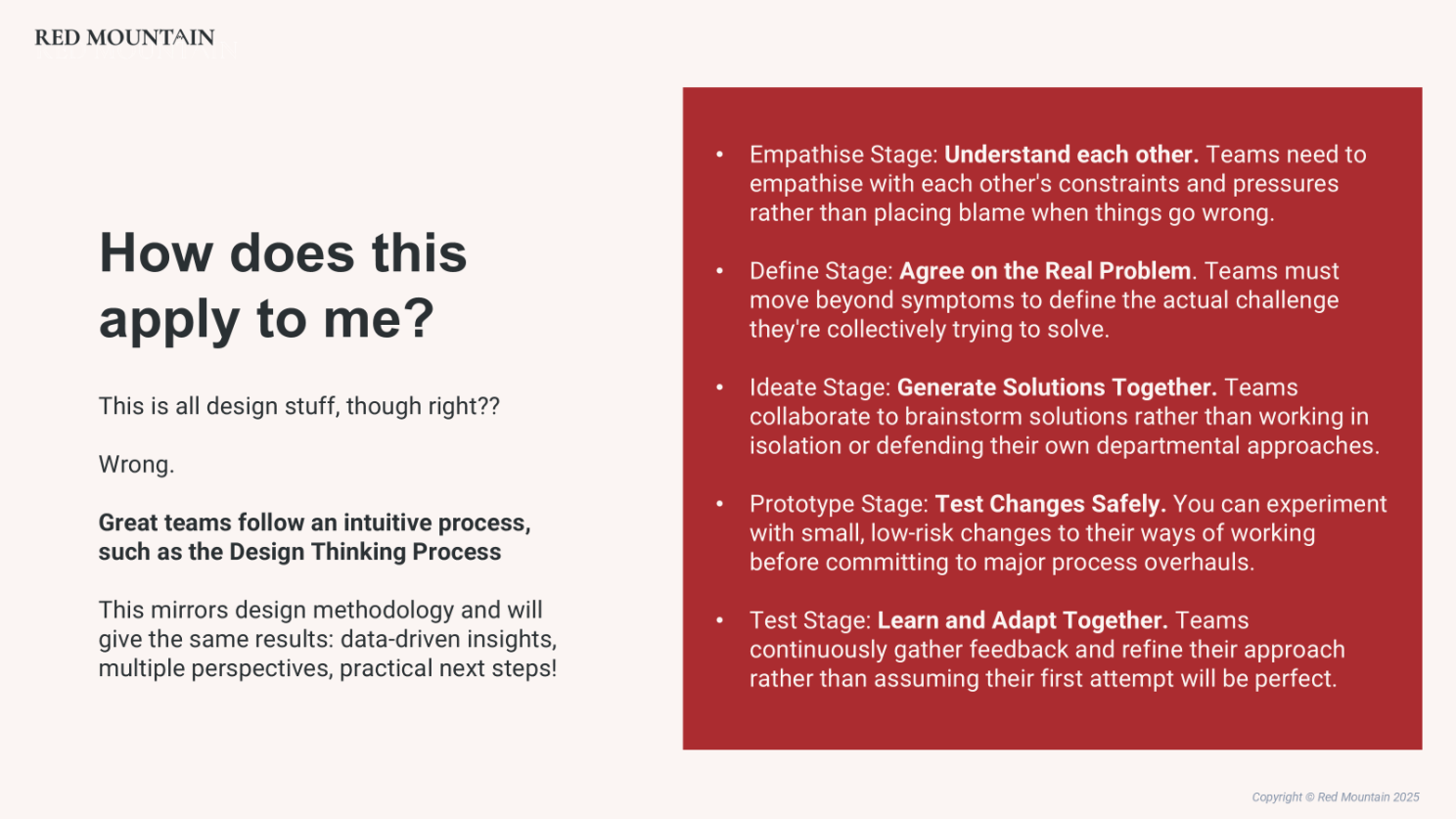
We have found that teams that go through this structured process together consistently reach better solutions than those that rely on traditional problem-solving approaches. More importantly, they reach solutions that everyone actually wants to implement.
What Changes When Teams Communicate Effectively
When we follow up with teams after a structured workshop, the changes are usually quite visible. Decisions tend to happen faster, largely because the initial conversation has addressed underlying concerns rather than merely surface positions, which means far less back-and-forth in the weeks that follow.
There is also noticeably less rework because potential problems are caught early through improved collaboration rather than discovered late, when they are expensive to fix. People report feeling heard rather than blamed, which changes how they engage with cross-functional work. They start focusing on solving problems together rather than protecting their own departments.
Most importantly, the quality of solutions improves because they are developed with everyone's constraints in mind from the outset, not added as afterthoughts.
How We Approach This
Our approach starts with alignment rather than action planning. Before diving into who does what and when, we invest time in ensuring everyone understands what success looks like and what each team genuinely cares about.
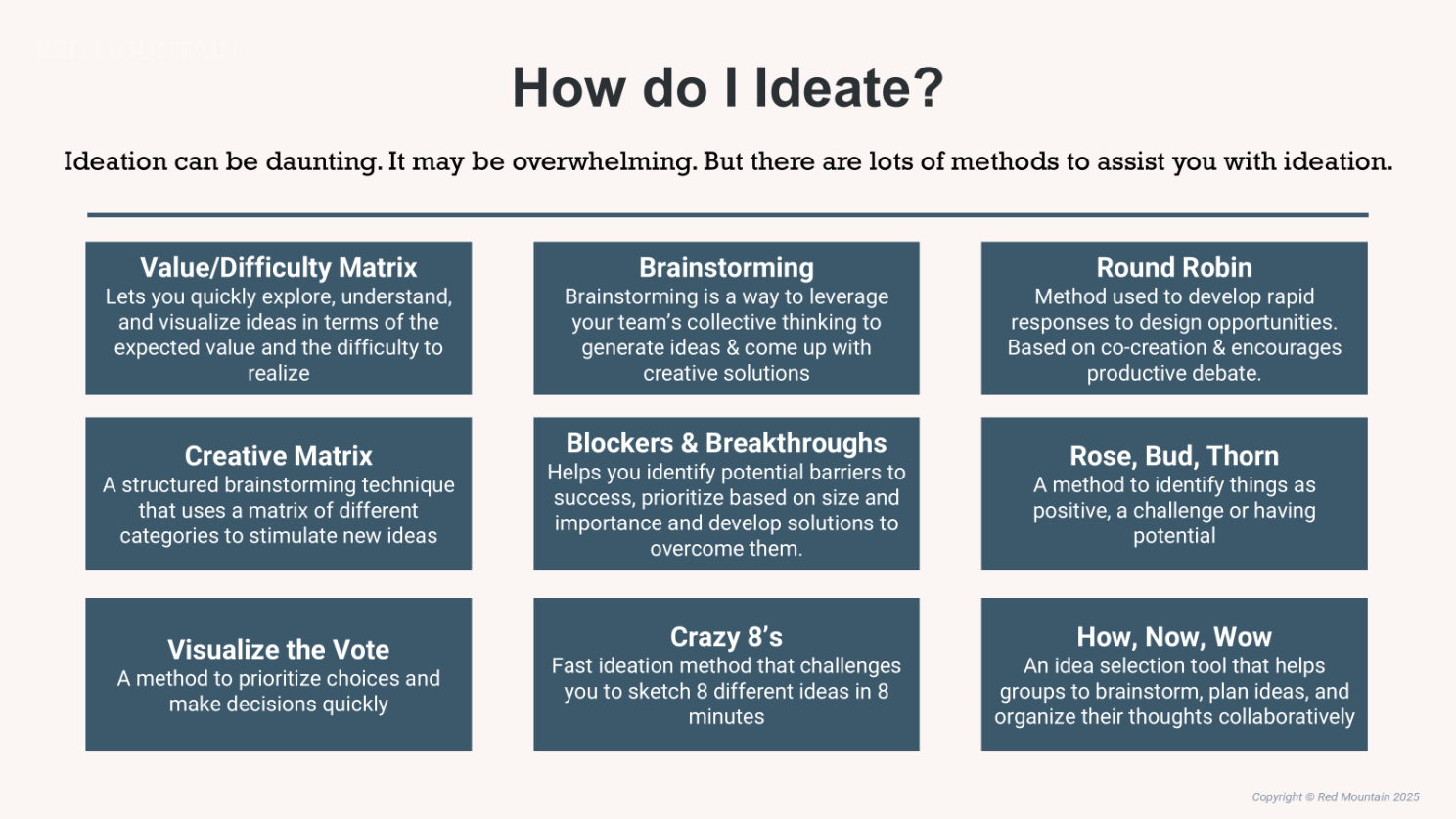
We ask "what are you worried about?" rather than "what do you need?" The answers are often quite different and much more useful. We define problems before generating solutions because teams often jump straight to brainstorming fixes without confirming they are all solving the same underlying challenge. We also create space for different voices because the best solutions often come from team members who do not usually speak up in traditional meetings but have valuable perspectives to share.
Brilliant Teams Still Need Better Processes
We have worked with enough cross-functional teams to know that the underlying talent and commitment are almost always present. The frustration stems from brilliant people who care deeply about their work but struggle to translate their individual expertise into collective action.
What makes the difference is rarely better people or even better strategies. It is better processes for helping good people work together effectively, especially when they bring different expertise, priorities, and perspectives to the same challenge.
If your organisation is experiencing a gap between strategic thinking and practical implementation, the answer might not be in the strategy room at all. It might be in creating the right conditions for your teams to truly understand each other and collaborate from that foundation.

Ready to talk about your challenge?
Every project starts with a conversation. We will be straight with you about whether we can help.
Start a Conversation