

Why the Best Teams Talk About How They Work, Not Just What They Work On
February 2026
Ask any leader about their biggest frustration, and conflict often surfaces. Look a bit closer, and most will say the same thing: their team has incompatible personalities, people who do not get along. But that is rarely the real issue. The problem is almost never that people work differently, but rather that nobody has ever genuinely talked about how they work differently.
We tend to treat conflict as something to fix in people. If only we could make the decisive types less pushy, the cautious types less hesitant, and the harmony-seekers less conflict-avoidant, we might think that would be enough. But that misses the point entirely. Conflict rarely arises from different working styles in themselves. It stems from a misunderstanding of why someone behaves as they do, because no one has taken the time to discuss how they naturally prefer to work.
Someone who naturally moves quickly runs straight into someone who needs time to think things through. To the rest of the team, the quick person appears reckless, while the careful person seems to be stalling, even though neither is wrong. They are simply starting from different points.
The same principle applies to individuals who are people-focused versus those who are task-focused. Or those who want everyone to agree before making a decision, versus those who need a clear instruction. Different starting points, no initial discussion, and suddenly there is conflict that feels personal but is not.
The Difference a Shared Language Makes
Here is what we see making a difference: when a team develops a shared language that reflects how individuals naturally work, something changes. The friction does not disappear, but it no longer feels like personal rejection.
Instead of saying "that person is difficult," it becomes "they are the analytical type and need room to think." Instead of "they do not value the relationship," it becomes "they are outcome-focused. That says nothing about whether they respect me."
Once you understand why they function the way they do, you can adjust your approach to collaborating with them.
How Different People Actually Work
The Social Styles framework identifies four broad ways people naturally operate, and most teams contain a mix of all of them. Each style sits on a scale of assertiveness and responsiveness, and understanding where you and your colleagues sit on that scale is the first step towards better collaboration.
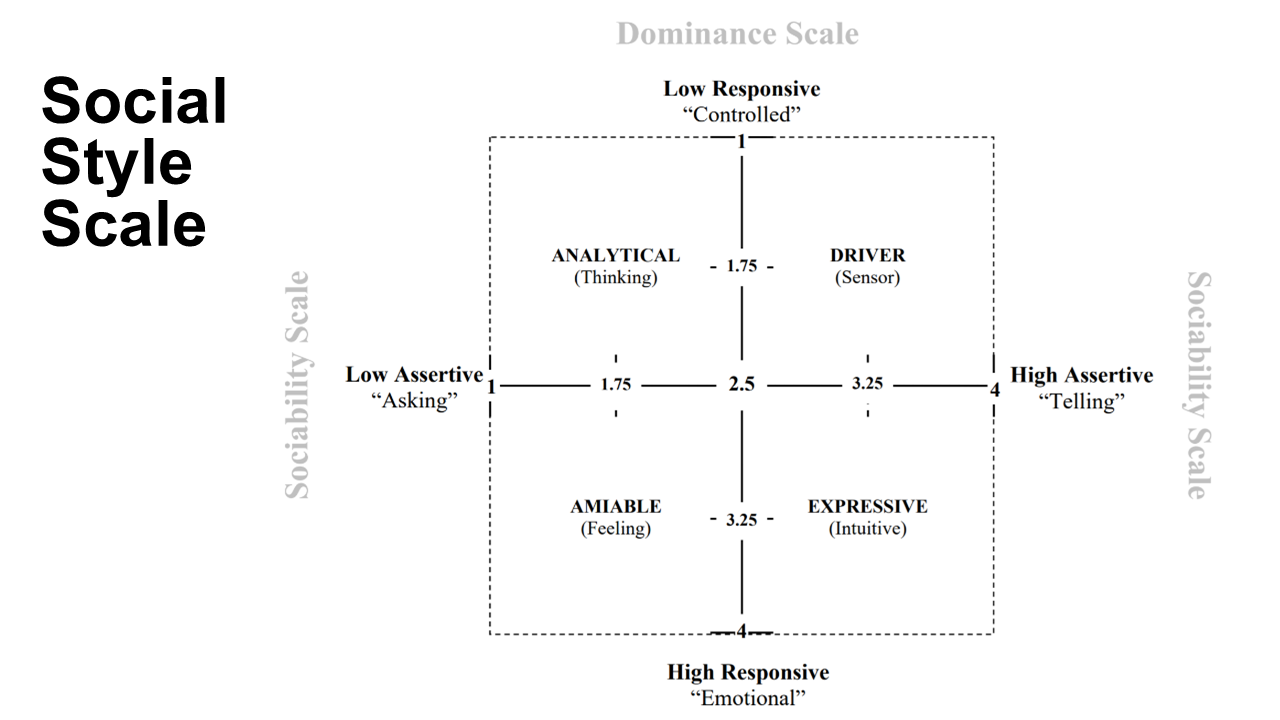
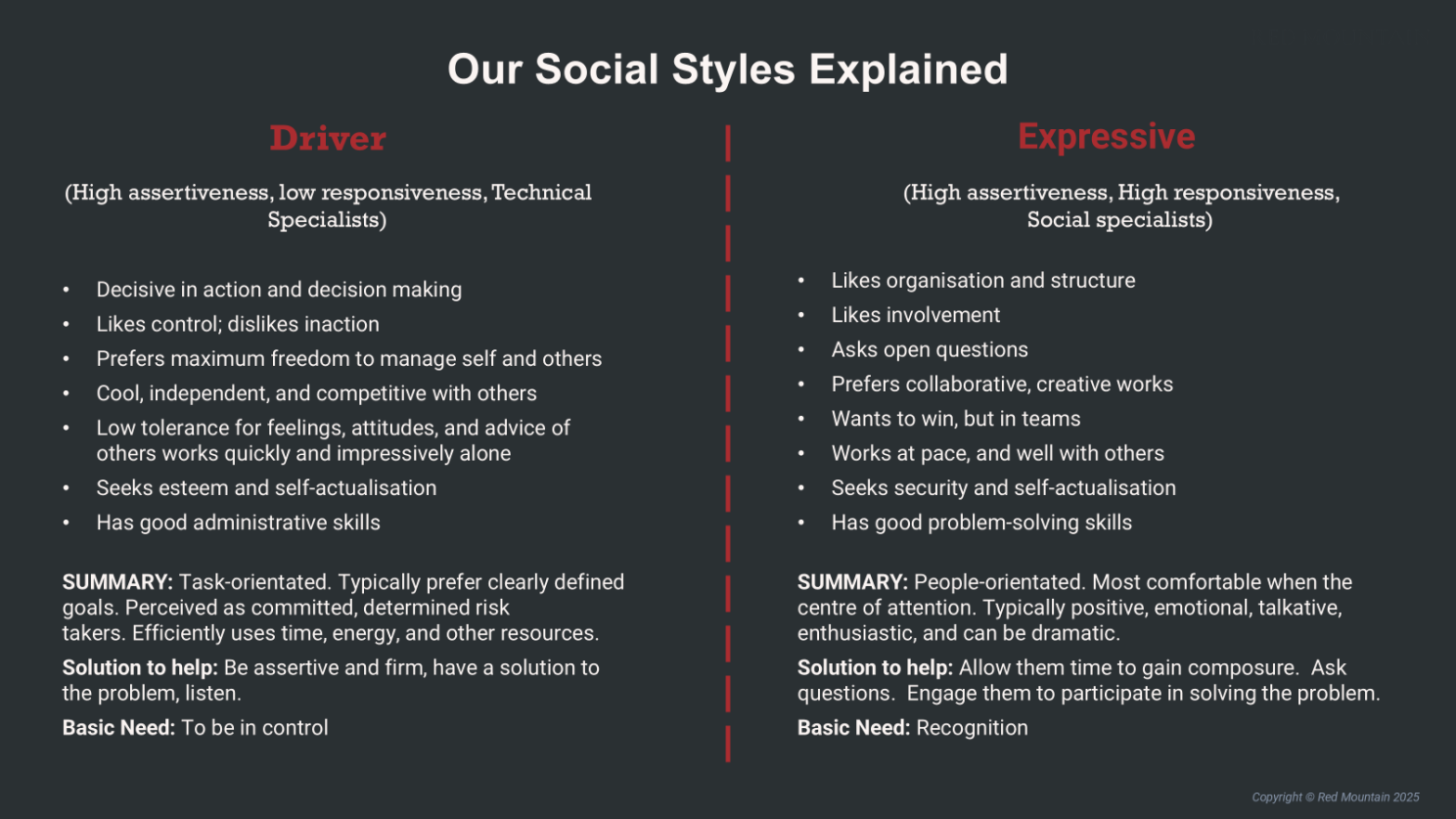
Drivers are task-oriented and decisive. They value control and efficiency, are focused on getting results, and want to move quickly. Their basic need is to be in control, and they respond best to directness and firm solutions. Expressives are people-oriented and collaborative. They value being included and recognised for their contribution. They thrive on connection, ask open questions, and need to feel that their input matters. Their basic need is recognition.
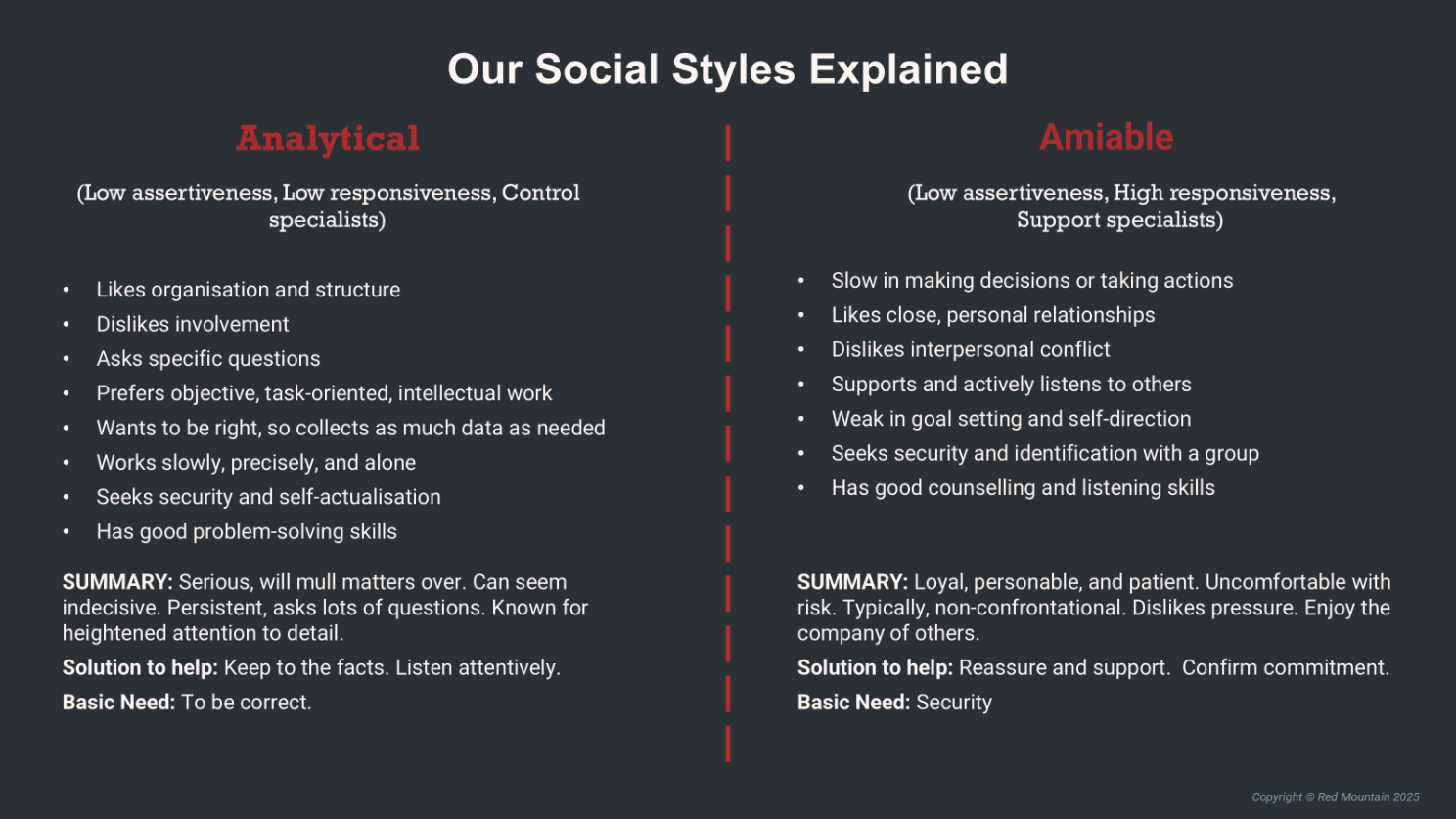
Analyticals are detail-focused and systematic. They value accuracy and understanding the full picture before moving forward. They need time and information before they are comfortable committing, and their basic need is to be correct. Amiables are relationship-focused and steady. They value stability and maintaining harmony within the team. They seek reassurance, dislike interpersonal conflict, and have a basic need for security.
Most people are a mix of these tendencies, but most also have a default they revert to when things get tense. Once you know your own default and understand what others tend to revert to, it becomes much easier to read the room before a situation becomes difficult, adapt your communication, and ask the right questions rather than making assumptions. That awareness is what turns small frustrations into productive conversations rather than letting them become entrenched.
What Works
None of this requires changing anyone. The real work is understanding what people need and meeting them where they are.
In practice, this means adapting your approach to the person you are working with. Drivers appreciate directness and efficiency, so come prepared with a clear recommendation. Expressives need to feel recognised and included in the process, not just informed of the outcome. Analyticals will want to see that you have done your research before they commit. And Amiables respond best to reassurance and a straightforward way forward that does not create unnecessary disruption. These are minor adjustments, but they make a significant difference.
When Things Get Tense
Tension still arises even when people understand each other. When it does, the most effective responses are those that move beyond the argument to what truly matters. Pausing to acknowledge that both parties are trying to solve the same problem. Admitting when something has gone wrong. Asking what the real concern is, rather than responding to the surface-level disagreement. Identifying the bare minimum needed to move forward. Being clear about what you need and when you need it.
These approaches work because they defuse conflict without conceding ground. They are quick to implement and redirect energy towards resolution rather than escalation.
The Real Difference
Most team conflict comes down to people needing enough understanding of each other to ask clarifying questions rather than assuming the worst.
The teams that handle conflict well are not those with perfect chemistry or identical personalities. They are those who have identified their differences, understood what each person needs to perform well, and developed ways to work around that reality.
That is not a personality fix but a system you develop. And it begins with genuine conversations about how people truly behave.

Ready to talk about your challenge?
Every project starts with a conversation. We will be straight with you about whether we can help.
Start a Conversation