

Turning Student Experience Data Into Actionable Strategy
Atlantic Technological University

Survey responses
Student interviews
Collaborative workshops
Ideas generated
SMART goals prioritised
Personas & journeys
Building a Shared Picture of Student Experience Across a Newly Unified University
Atlantic Technological University is one of Ireland's newest and largest technological universities, formed through the merger of several regional institutes of technology. With multiple campuses stretching from Galway to Donegal and a diverse student body spanning school-leavers, mature learners, online students, international students, and neurodiverse students, ATU was building a coherent, unified identity and wanted to ensure that the student experience kept pace with that ambition.
The university was already collecting substantial amounts of student feedback, but it was scattered across different systems and had not yet been consolidated into a single, shared picture. Survey data, module evaluations, and the day-to-day qualitative reality of student life were not yet connected in a way that could easily inform strategic decisions. ATU wanted to change that: to understand how different student groups experienced their journey, surface the moments that mattered most, and use that understanding to shape a coordinated strategy for improvement.
With campuses at different stages of integration and a student cohort with genuinely varied needs, the institution needed more than a research report. It needed a process that would produce a shared evidence base, generate practical solutions grounded in that evidence, and build the conditions for the whole institution to act together with clear ownership and momentum from the outset.
A Structured, Collaborative Process From Research to Roadmap
Red Mountain designed and delivered a six-phase engagement process built on three principles: research that reflects the full diversity of ATU's student body, solutions shaped by those closest to the work, and implementation momentum built in from the start rather than added at the end.
Research and Discovery
The research phase drew on quantitative and qualitative sources, presenting student and staff perspectives side by side. Over 1,295 students responded to two survey instruments, and a separate staff survey generated a further 367 responses — enabling direct comparison of perspectives and identifying both shared priorities and areas where staff and student experiences diverged. Fifteen one-to-one staff interviews and eighteen in-depth student interviews added qualitative depth that surveys alone cannot provide, with a deliberate focus on cohorts often underrepresented in standard feedback: mature students, online learners, international students, and neurodiverse students.
Personas and Journey Mapping
Using the research findings, we developed five evidence-based student personas — Darragh, Eloise, Anthony, Laoise, and Megan — representing key cohorts at ATU across different entry routes, life stages, support needs, and motivations. These were not abstract archetypes but research-grounded profiles, co-created with ATU staff, including direct collaboration with the Disability and Learning Support Service. For each persona, we mapped detailed user journeys across eight stages of the first-year experience, tracking what students do, how they feel, where friction arises, and where the greatest opportunities for improvement lie. Two versions of each journey were produced: a comprehensive analytical document and an interactive visual version for use in workshops and stakeholder engagement.
Ideation and Prioritisation
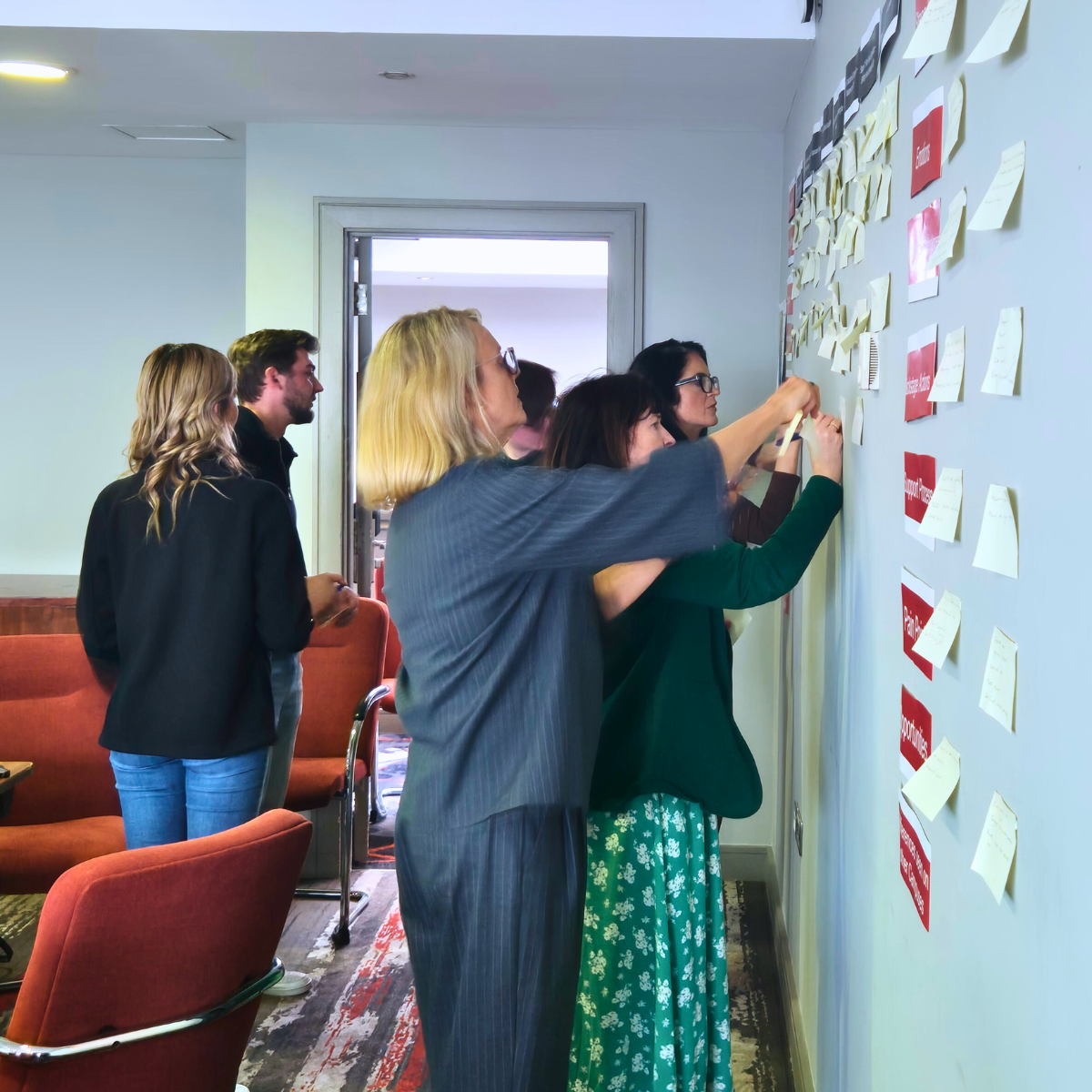
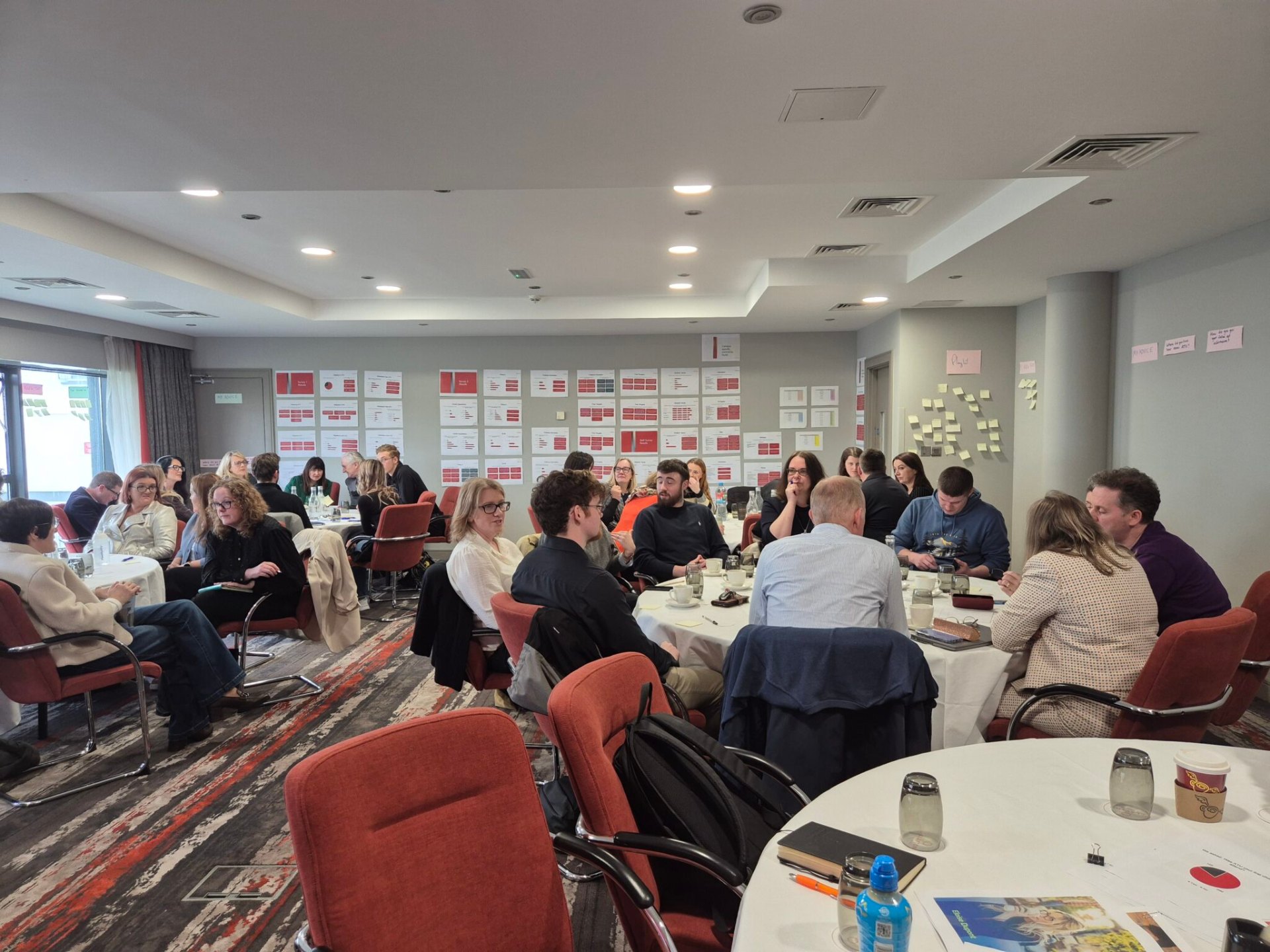
Seven collaborative workshops brought together staff and students throughout the project. Two dedicated ideation workshops used structured techniques, including "I wish" statements mapped to each journey stage and each persona, to generate 254 ideas to improve the student experience. Drawing inspiration from fields beyond higher education, including game design and visitor experience, helped participants think beyond existing conventions. Ideas were then consolidated, rigorously evaluated against a structured criteria framework, and refined into SMART goals. A final student validation workshop confirmed real-world resonance before the prioritised set was presented to the institution's leadership.
A Strategic Foundation for Ongoing Student Engagement
ATU received a comprehensive, evidence-based, and practical strategic framework to guide sustained improvement across all campuses. The research brought together over 1,662 student and staff responses, with dedicated cohort- and campus-level analysis to surface both universal themes and location-specific needs.
Five detailed, research-grounded student personas and five interactive journey maps provided the institution with a shared language and a set of working tools for testing proposed changes against the full range of the student experience. From 254 generated ideas, a rigorous consolidation and evaluation process produced 46 SMART goals, each with a defined target audience, measurable outcome, and clear implementation approach. Eight of these were identified as high-value, high-feasibility improvements ready for immediate action, including a "First 5 Weeks at a Glance" visual roadmap, earlier timetable release, proactive student check-ins, and improved signposting of support services.
ATU also received the tools to continue this work independently: a research toolkit enabling annual experience reviews, an Excel tracker consolidating all 46 ideas with SMART goals, timeframes, and ownership, and a prioritisation framework for ongoing strategic planning. By the time the recommendations were presented, the institution's own teams had helped shape them and already knew who would lead each initiative.
Momentum, Ownership, and a Clear Path Forward
ATU launched pilot programmes within four weeks of project completion. Cross-departmental teams formed around specific improvement areas, with clear ownership assigned before the project concluded. The eight-stage student journey framework now guides decision-making across student-facing departments, and the institution has both the methodology and stakeholder buy-in to build on this work on its own terms.
Perhaps most significantly, the process itself created the conditions for action. By embedding ATU's own teams in the synthesis and prioritisation work throughout, the institution arrived at the recommendations, having helped shape them. The student validation workshop generated not just feedback but active participation, with a student volunteering to present the findings to the Deans. The work did not sit on a shelf: it moved directly into institutional planning, with a clear structure for progressing from quick wins through to strategic investment.
ATU is now well-positioned to deliver a more coherent, supportive, and consistent student experience across all its campuses, one that reflects the full diversity of its students and what they need to succeed.
You made the work so engaging, and your enthusiasm helped re-energise us and sharpen our focus. I am delighted with the outputs of the project and excited to see the ideas come to life!
Michele Glacken
Atlantic Technological University
- Client
- Atlantic Technological University
- Sector
- Higher Education
- Participants
- 1,662+ survey responses, 15 interviews
- Duration
- 12 weeks
Want similar results?
Every project starts with a conversation. Tell us what you are working on.
Get in Touch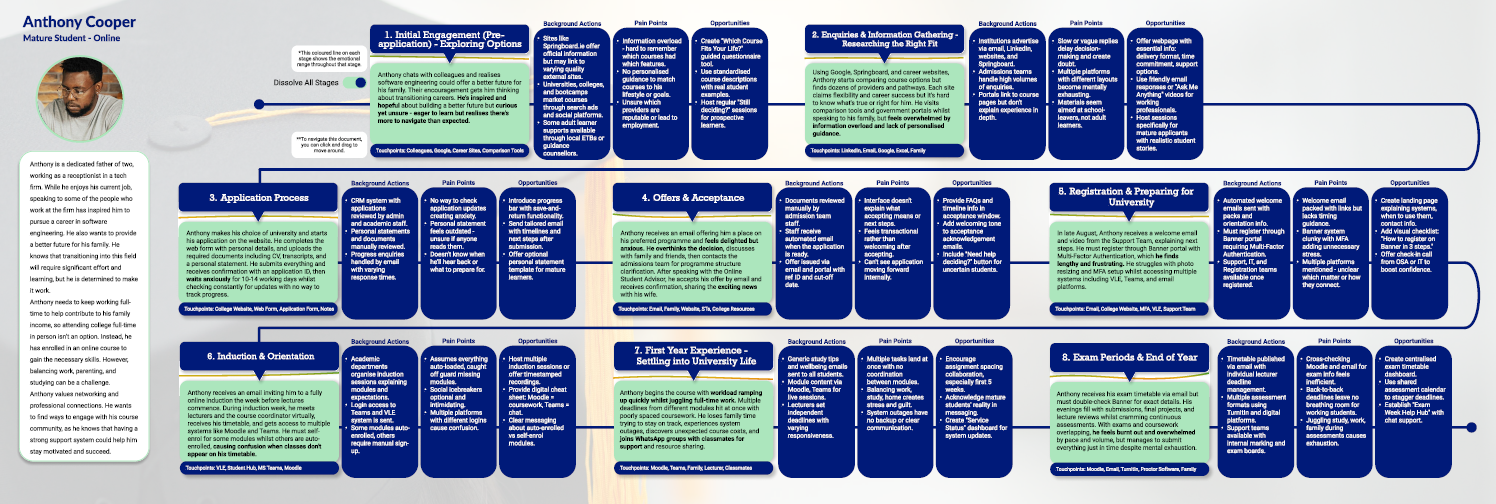
Click to expand · Scroll horizontally to explore
Ready to talk about your challenge?
Every project starts with a conversation. We will be straight with you about whether we can help.
Start a Conversation